Be yourself; Everyone else is already taken.
— Oscar Wilde.
This is the first post on my new blog. I’m just getting this new blog going, so stay tuned for more. Subscribe below to get notified when I post new updates.
Be yourself; Everyone else is already taken.
— Oscar Wilde.
This is the first post on my new blog. I’m just getting this new blog going, so stay tuned for more. Subscribe below to get notified when I post new updates.
My general takeaway from this course is that I have learned to create a BLOG and officially start a blog site. I never considered posting and viewing blogs before taking this course. I usually avoid social media outlets and just enjoy information and updates posted on varies sites from what is told to me, by the general public, such as family, friends and evening news. But I realize that a blog site can be a tool to give me a professional identity. I can brand myself while, on my educational journey. I can follow and comment with others, who are on their educational journey, and I can learn from people who are already established with careers or people who have insight on subjects that is of interest to me. I was hoping to learn more about what research can do for social work. I also wanted a clearer understanding of how to apply research. Both of those desires were achieved. I learned that statistics will continue to have a use in our lives, as we collect data and use it to make social change. I understand that every theory should be tested and tested again. I learned that even the best researchers, is agreeable with getting their findings refuted, if it can be tested and proven. I see that research is a top priority in our approach and dealings within social work.
Before today’s class, I felt that ethical research was being respectful to the experience of others, as you dig for information. I was aware that there are rules and laws within the guidelines of conducting research, and that a researcher should be diligent in their quest yet, operate only inside of the regulations allowed. After today’s class, I feel that ethical research is to remain a respected process. Results can not be summed up in one assessment. A researcher must be willing to put in the time to prove their findings either, wrong or right. Different approaches and repeat examination of your research findings will help to qualify your work. My understanding of ethical issues is important to the affect of my research, because I am seeking opportunity to appropriately report out on the results of people participation. I must become familiar with the process of ethical practices while doing my research. This will ensure a better body of work and an effective outcome of accomplishment.
The final research paper is due in a couple of weeks. It is a major paper. In order to prepare for this assignment, I plan to review my notes taken throughout the semester. I plan to review the main points at the end of each chapter studied in our textbooks. I plan to re-read, review and re-think my literature review paper to make sure that this portion of the assignment is lining up with the report that I am trying to deliver. In order to complete this project, I will need to get some rest in order to refresh my mind and thoughts. Being honest, this is a somewhat challenging time to achieve focus. Although we are limited with travelling and socializing, there is still a lot of pressure to stay energetic and creative on schoolwork, job duties and family dealings.
I am approaching the completion of this task, by setting aside some time pre-weekend and on the weekend to strictly work on my report; no television, phone calls or text allowed during these hours. My plan is to have this assignment complete on time if not, two or three days prior. Completing such an assignment early is better for a graduate level student to aim for. This will give me time to make additions or corrections as needed. However, an assignment this important should not be rush in, even once it is completed. This report should be carefully examined before submission. A deep breath, clearing my mind, surround myself with textbooks, notes and laptop- will be my recipe to complete this task. Although this will not be an easy process to get finished, it will be worth the struggle to complete this mission.
Biases in the choice of Research Method
As a researcher, I will rely on a combination of research methods, that being quantitative and qualitative. I will explore quantitative research methods because it generates precise yet, generalized findings. However, I will mostly employ the qualitative research method, because it is known to emphasize deeper meaning of the human experience. With personal interviews and observations, the qualitative method will produce the best results for me inquiring of a certain group perspective about their own experience of homelessness. It is important to recognize the biases in the choice of the research method, because it will allow you to provide more accurate information to your audiences. What could determine the use of a particular research method for me will most like be explanatory/ opposed to exploratory. Early in our Essential Research Methods for Social Work textbook was an example given, if a researcher set out to explore why homeless people refuse to sleep in a shelter. Well, if your ultimate aim is to explain this phenomenon, then it would explanatory. But if your goal is to merely gain familiarity with the phenomenon and generate possible explanations or insights that can be tested out more carefully and later in an explanatory study, then at this point, your purpose is exploratory. I had to read that section twice to get it understood, but I now understand the difference. Just as research methods can be used in a combination; one will more than likely lead the focus, but both practices should be explained separately.
After tonight’s class my thoughts on research designs have broadened. Although the jargon can be a bit intimidating, I found the content to be interesting with the given examples. I think that the sources of measurement error was an important section. After all, if researchers supplied data that was often flawed; that being neither reliable and/ or neither valid, we would have to operate in a guesstimated world. In the errors in alternative sources of data section, Self-Reports, Direct Observation and even Examining Available Records can all be less costly and time consuming for a researcher but may also produce the most inaccurate reports when reliability is needed.
Identifying an appropriate research design for my study is important, because I will be using qualitative, as well as quantitative research methods to complete the assignment. I must be able to distinctively express the differences in the two methods on which I obtained my results. The research design I would rely on for my study will possibly be “inter-observer reliability or inter-rater reliability- the term for the degree of agreement or consistency between or among observers. Although face validity research can be subjective or bias, it appears to be an exercise that I will depend on, due to my interest being the personal perspective of a certain group of people.
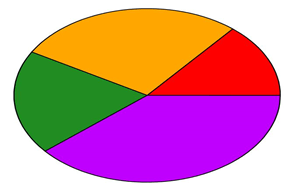
My thoughts and feelings about statistics are respectful. I am respectful to the subject of statistics because I have never been able to conquer it. Personally, statistics is a worthy opponent of mines. Statistics makes sense to me and feels right to have in the field of educating, but I struggle to grasp it. The reason I feel the way I do about statistics, is because it is a common method used in everyday life. Statistics can be used as a simple tool to explain a lot of general situations. However, statistics can also be equally challenging. I found statistics to be a fun subject when you are challenged with an equation or task and get to the answer correctly. Achieving a statistics formula is a satisfying win. But you must pay attention to the problem. For a class (or individuals) to appreciate statistics more fully, in my experience is to work as a team. You must be willing to share what you have discovered or have come to understand with other people. Because in the next few instances, someone may be able to pick up quicker and help your understanding? What is the purpose of statistics, if any? The dictionary states that statistics is a form of math analysis that uses quantified models, representations and synopses for given experimental data or real-life studies. In statistics, conclusions are drawn from the data.
S. Goodman
The current biases in my research paper is that I want to only consider the agents of my topic, which are homeless people. Too long, I feel that we, including the most caring people and professionals put our own emphasis on what homelessness is and what being homeless feels like. So, my bias is to hear strictly from those that are experiencing the situation. It is important to be aware of my biases while doing my literature review because research is subjective. Research can always be tested, proved or disapproved. Things and opinions often change around us. Therefore, I want to be very mindful about making absolute claims while researching, research. I believe that my biases can affect the conclusions to my literature review reports. Mainly because I am trying to get my audience to agree with the aha! moment that I think I have arrived at, while studying the literature. But I must stay open minded about different opinions in my literature review, because, while I am trying to highlight one or two points on the matter, there may be underlying evidence that contradicts or challenge the information that I believe to be understanding. Moving forward, to address those biases that we are aware of in our paper; we should probably state them, so that we can expound on the agreeable content and the challenging information. This will allow us to dig deeper into the subject(s), such as homeless people perspectives and bring more evidence of the results conducted from the literature review.
The new insight or perspective I have towards research for my future social practice, is that research is necessary to qualify my thinking. There is probably nothing new under the sun in social work that has not already been thought about. However, theories must be tested and proven, or in some cases disproved. At times, research can be view as hard work and extensive work. While, this is sometimes true, the work is usually worth it. When you do research on an interest of yours, your understanding can be opened. You place yourself in a position to learn things that may or may not be helpful. This can save you from spending unnecessary time and energy on trying to make something work, that is not a good fit.
When it comes to social work, research is very relevant. Research gives us the guide to things that have been thought about and worked on. Research is the key code to the elements of what has worked in the social work realm. Without research you can find your self on a long journey of recreating a wheel that already exists. Taking a journey is not always a bad thing, but I want to point out that research is always a good tool to use along the way.
What can research potentially do? Research can make or break a theory. Research can potentially be a blueprint to a cure for incurable diseases. Research can credit or discredit philosophical and scientist problems. Research can tell us if there is other life form in the universe that may not publicly be knowable. Research can potentially assist social workers provide the support and services needed to help solve the world problems in society.
Social workers should think of research as a part of the process for becoming a validated person to deal with the issues that impact people, children, families and the world around them.
I believe that social workers may sometimes have to choose between doing research and working with their clients. Research is the study of something that can establish facts. However, there are instances within social work practices that traditional or proven exercises may not be appropriate. Like everything else that exists research results can change in time and furthermore become useful in a new way. Working for the clients and doing the research is on “different sides” of the same coin, but it is on the same coin. Research can help with working with your clients, and research can be modified and help work out an issue that past research may have fell short on.
I picked this meme because his statement is true. Research should be a completed masterpiece that answers questions and remove doubt. Well…. that, and the fact that this meme includes a photo of “the most interesting man on earth”
A literature review can be considered a summary of previous researched articles/ reports of topics that you want to discuss. Oftentimes people find themselves wanting to put emphasizes on a matter that is of interest to them. A literature review gives us the opportunity to highlight significant and sometimes debatable issues. However, to complete a literature review you should be prepared to read and cross reference previous work on the subject. The thought of this particular assignment can be intimidating. But if you allow yourself some time to focus and follow the basic steps, you will be successful to completing a literature review. I believe that I have what it takes to work the two steps that I just mentioned. As social work students, we are often allowed to work on issues that particularly matters to us and I consider this an advantage. The strength that I would build upon in completing a literature review is included in the image posted below. As I mentioned earlier in this BLOG (you must summarize). You build up on the work that previous researchers have achieved and add to the chain. Thus creating a path for everyone a chance to make it to top of this research mountain.

This Blog will identify social issues that impact society and the affects that it has on human conditions. The nature of these topics may be may be political, spiritual or racial. We are in an interesting time in history and our worlds are connecting in ways that cultures are colliding, as well as pushing beyond boundaries and traditional ways of thinking and living.

 512slgoodman.swkgrowth.blog